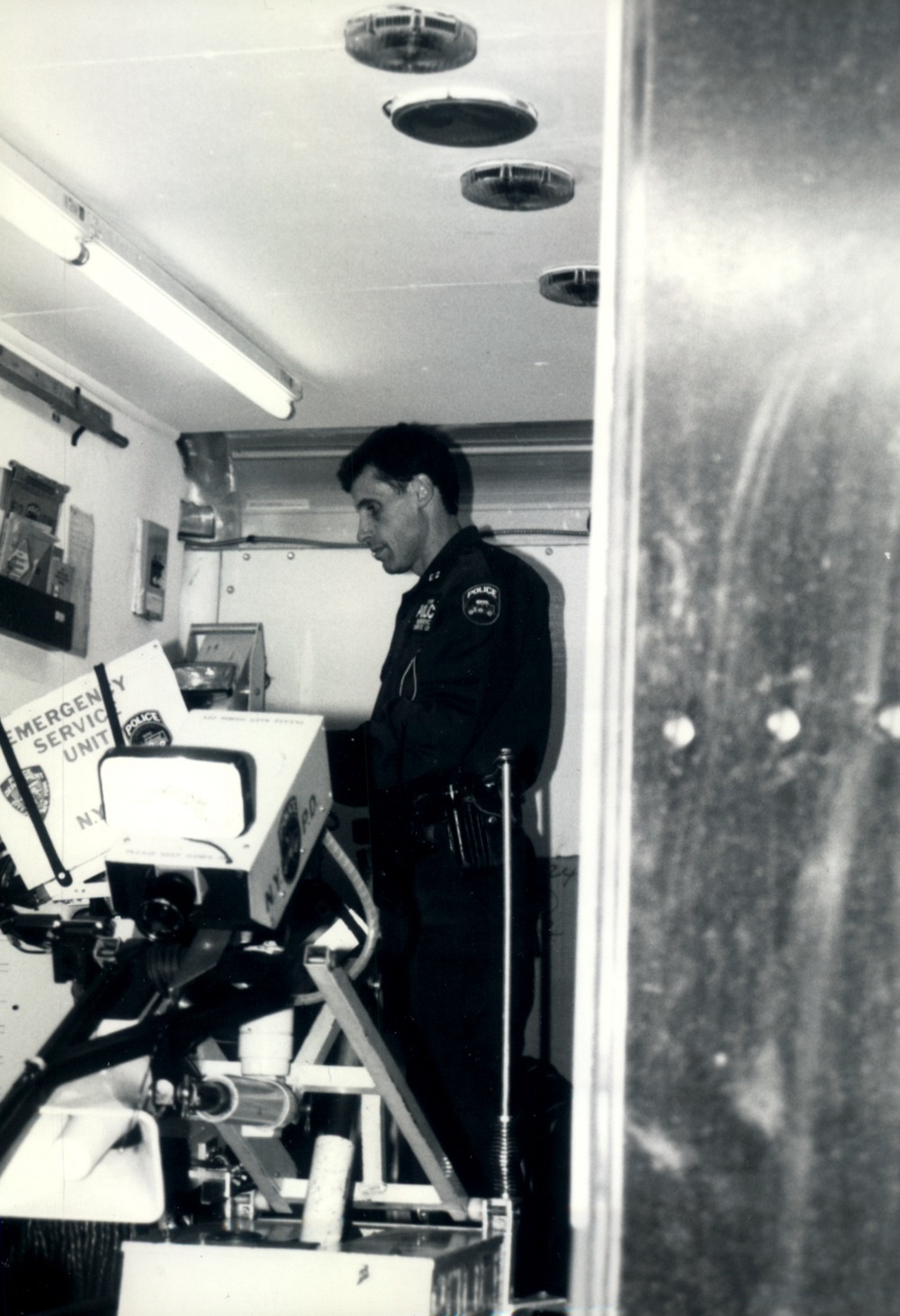
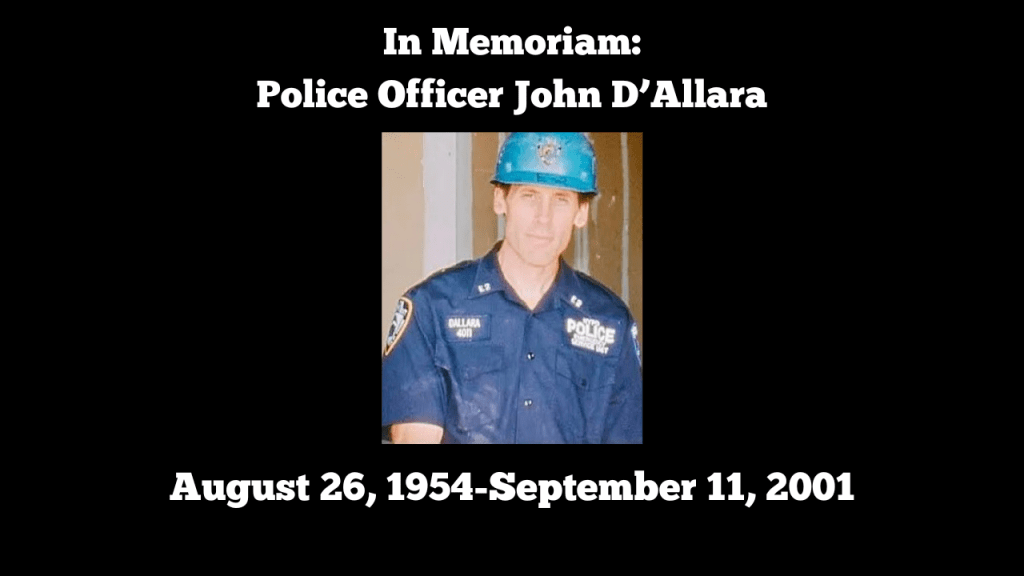
A look back at the heroic life and death of NYPD ESU Officer John D’Allara — the last member of his unit and department to be recovered from the World Trade Center
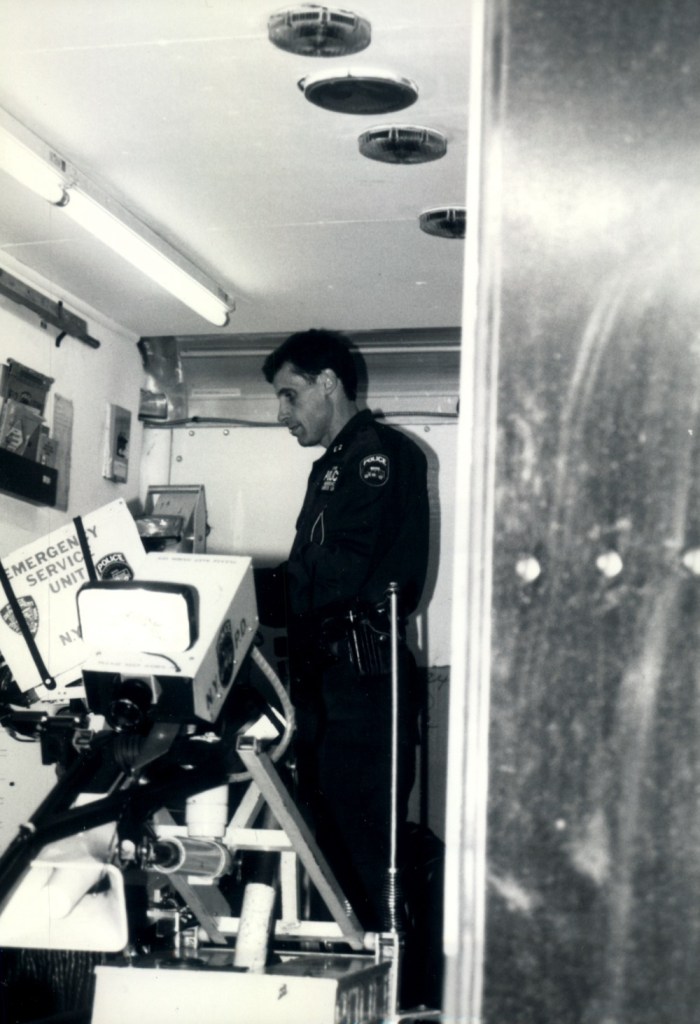
Thursday, April 11, 2002. Exactly seven months since the devastating terrorist attacks of September 11, 2001. As clean up at the site of the World Trade Center was winding down, another reminder of the devastating price so many had paid seven months prior reared yet again its ugly head.
As rescue workers were back at it once more for another solemn day of recovering anyone left in the rubble of what once was two majestic 110-story towers, that late spring morning saw them recover a man whose 47-years were filled with a genuine love and dedication to his others, a love and dedication so powerful and firmly embedded in his identity, he died for it on that fateful September morning seven months prior. His name was John D’Allara.
Born on August 26, 1954, to parents John and Helen, John’s story begins in The Bronx, a borough he was so firmly tied to, his roots to it based in many things including his education. An alumnus of St. Lucy’s School, Christopher Columbus High School, and Herbert H Lehman College respectively. Graduating in 1978 with a Bachelor of Arts, he was a Boy Scout, camp counselor, and judo practitioner (placing second in the city championships as a competitor in the junior division).
Majoring in physical education, his late teens and early twenties saw him work hard at bodybuilding as a member of the Mid City Gym in Manhattan from 1973 until 1978. In a testament to his commitment to others, John’s majoring in physical education wasn’t just a personal mission to better himself, he wanted to better others too, and as a physical education teacher at Park West High School, where one of his students was future NYPD ESU colleague Sergeant Rodney Gillis, he got to do just that.
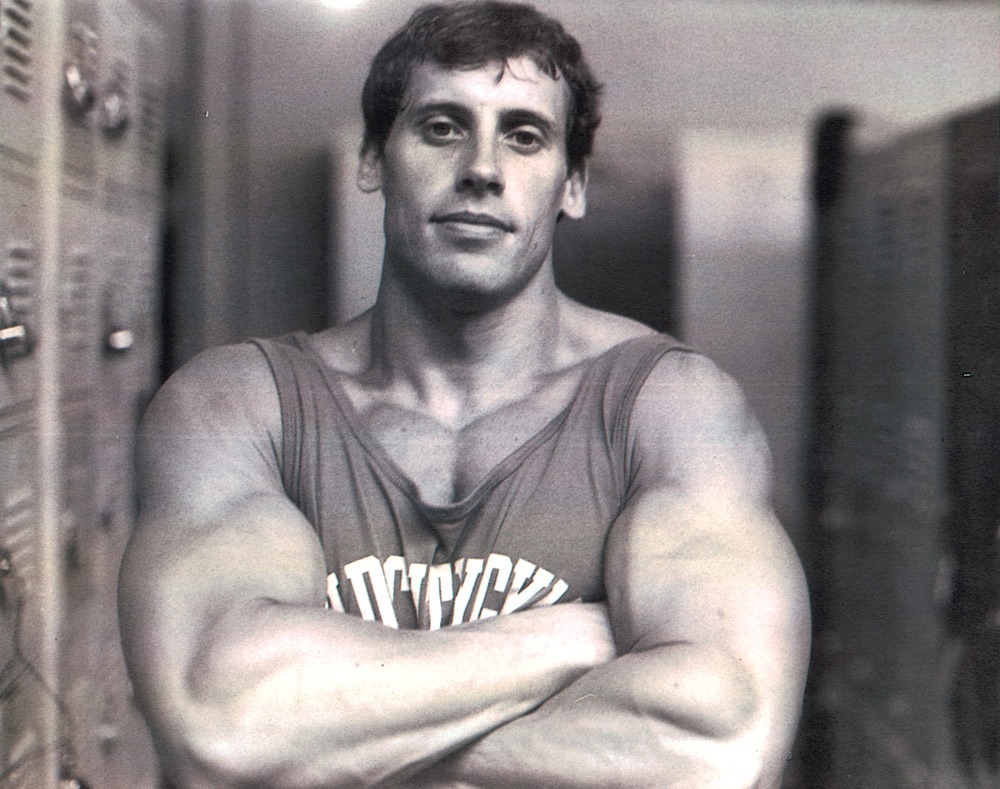
(Credit: 9/11 Voices for Resilience Center)
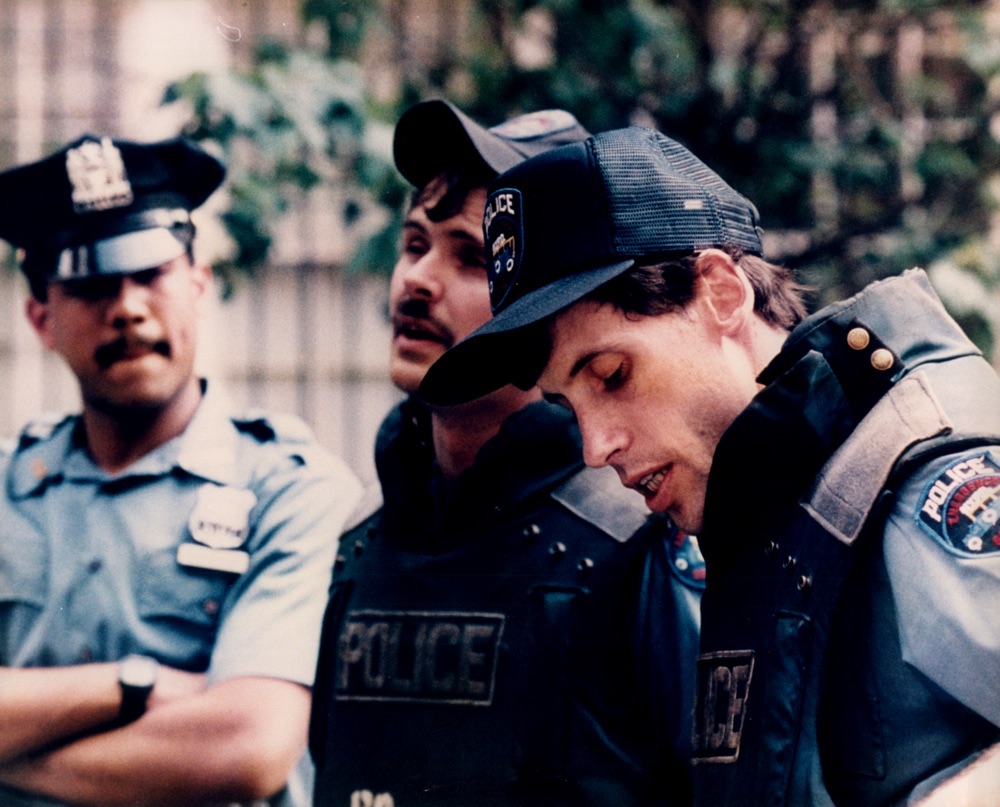
In 1983, his service to others took a greater step when he was called to the New York City Police Academy. Graduating in June of that year, his early years on the force saw him serve in his home borough as an officer in the 46th precinct. Working patrol, he very quickly distinguished himself as the kind of squared away cop needed in an era like that. The Bronx back then was tough, the city was tough, but then again, so was John.
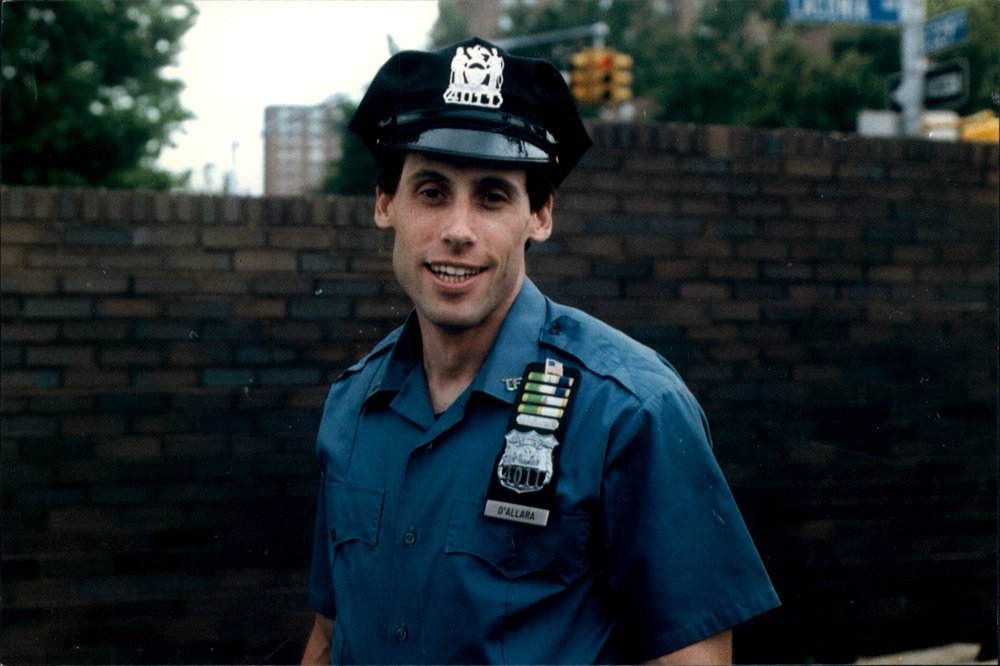
(Credit: 9/11 Voices for Resilience Center)
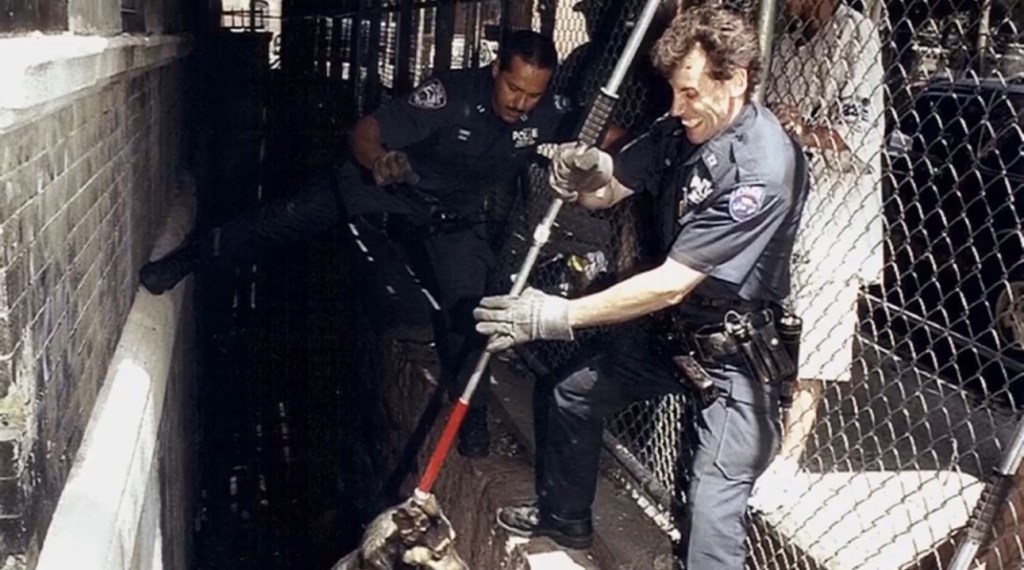
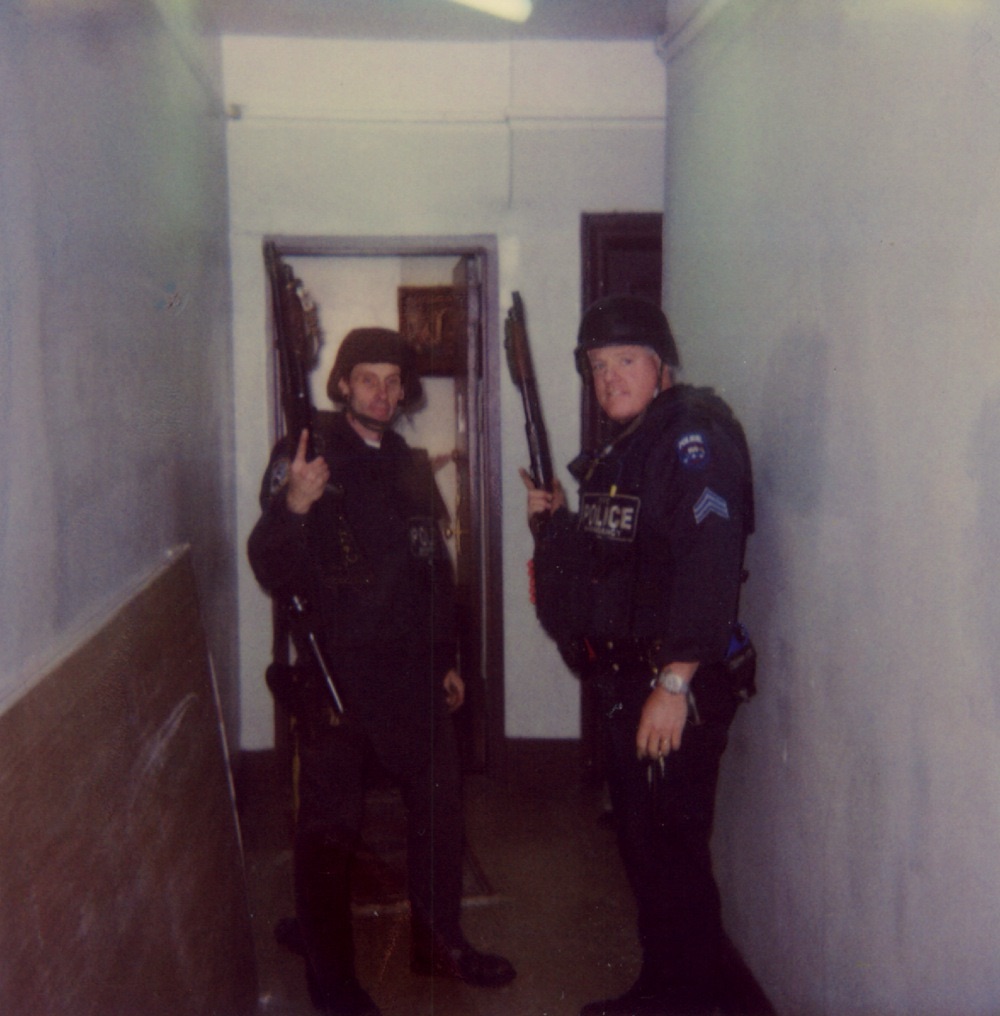
Soon going into the borough wide task force, greater achievements were very much on his horizon, and that would manifest itself in 1987 when he would join the elite Emergency Service Unit, assigned to Upper Manhattan’s Truck 2 upon his graduation from Specialized Training School. Serving in the unit for 14 years, John saw and experienced all an E-Cop can and will working in New York City. Animal jobs, dangerous and violent criminals, rescues of those trapped in the water, cars, and/or trains following wrecks, saving suicidal subjects from themselves by talking them out of such a desperate act, and plenty more.
In a testament to his intelligence, John somehow even in the midst of a blossoming career in the police department found time to continue his education, obtaining a Master’s of Science in education in 1988. In addition to that, it was John along with the assistance of a few other fellow officers in the Emergency Service Unit who would rewrite the manual on the utilization of the RMI (Remote Mobile Investigator), an at the time groundbreaking tool utilized by both ESU and the NYPD’s Bomb Squad on tactical operations. Many of the suggestions he rewrote into the manual still being utilized in some form or fashion today.
His experience and steadfastness in the face of one dangerous situation after another quickly gained him the respect of all who worked with him. The stories vary, but all with the same theme: whatever scene John came upon, he immediately made better. Here are just some of them.
From retired NYPD Sergeant Special Assignment Michael Stewart:
“Quick story: one day, as the patrol supervisor in the 24th precinct, I responded to a wellness/welfare check for a young lady who wasn’t answering family members’ phone calls. After receiving no response to the door bell/knocking, I requested ESU response, and John arrived. We all expected a “full-on” forcible entry, but John basically said “… not so fast, give me a minute,” and he walked away. Next thing I knew, John appeared at the door from inside of the apartment – with the young lady. Turns out he had gone to the roof, climbed down the fire escape and entered through the bedroom window. The young lady had taken a few too many sleeping pills and was in a DEEP sleep – but, perfectly fine. John’s actions reminded me of a valuable lesson: Work smarter, not harder. God Bless You, John.”
From friend and fellow ESU cop Ed Reyes:
“John D’Allara responded to a family dispute in the 23rd precinct involving a gun. While we held the front of the building John with his partner pulled up, unlocked the deer slayer and it appeared he racked a round by only using one hand and pointed the shotgun at the perp who was, at this time, pointing his weapon out the window. No rounds were fired and condition corrected by ESU. Never did I think that one day this same ESU Angel would be training me in the RMI when I got assigned to Truck 2.”
By the summer of 2001, John wasn’t far away from retirement. Set to hit his 20th year of service in 2003, that was for all intents and purposes, going to be his last. Having just turned 47 that August, he was at his career peak and back home, had a loving family he was happy to look after. Back home at that time, was not The Bronx anymore but rather the suburb of Pearl River, New York where the longtime E-Man lived with his wife Carol and sons John and Nicholas, even continuing to scratch his civil service itch by serving as a volunteer firefighter in the town.
The intent upon the well-deserved retirement that awaited him? Continuing to serve others by going back into teaching. Even if he did leave the police department, his mission to serve others was only just getting started.
Moments after the hijacked American Airlines Flight 11 struck the World Trade Center’s North Tower on September 11, 2001, Emergency Squad 2, based out of the 26th Precinct in Harlem, sped on out like every other specialized fire or police unit in the city to the scene. On the large rescue truck ESU will often bring to major incidents was Officer D’Allara, Officer Ed Torres, Detective Joe Vigiano, Officer Vincent Danz who normally was assigned to Emergency Squad 3 in The Bronx but that day due to short staffing was working in Truck 2, and Sergeant Mike Curtin, a distinguished E-Man and Gunnery Sergeant in the United States Marine Corps who’d fought in the Gulf War a decade prior.
Arriving not long after they were dispatched, the crew proceeded into the North Tower, climbing the stairwells of the tower with medical equipment, tactical gear, and air-packs. In Sergeant Curtin’s case, he additionally had an MP5 gun at the ready. With major uncertainty surrounding the moment, the sergeant wanted the high velocity firearm with him in the event there were terrorists on the ground in addition to the air.
Undoubtedly saving numerous lives and getting many out of the tower, including that of a man Sergeant Curtin and Officer D’Allara strapped to a chair and carried out, their mission was halted when the neighboring South Tower collapsed at 9:59 that morning. Ordered to evacuate due to the immediate realization that the North Tower would also soon collapse, the team began their descent down. Egressing onto the battered Austin J. Tobin plaza which was above street level and required an escalator to access, the team led by Sergeant Curtin consisted then of Officer D’Allara, Officer Mark DeMarco, Officer Bill Beaury, and Officer Steve Belya.
With numerous survivors trapped on the plaza by the massive amount of debris that now covered the area, their immediate attention turned to removing the debris and in the process, removing the survivors, getting them down an escalator and onto the street below. Joining them on the plaza for this mission would be NYPD Bomb Squad Detectives Dan McNally and Claude Richards, who had just arrived and had also begun to aid the wounded survivors of the first collapse atop the plaza.
Detective McNally, in an interview with author and reporter Richard Esposito as part of the 2004 book Bomb Squad: A Year Inside The Nation’s Most Exclusive Police Unit, described the scene:
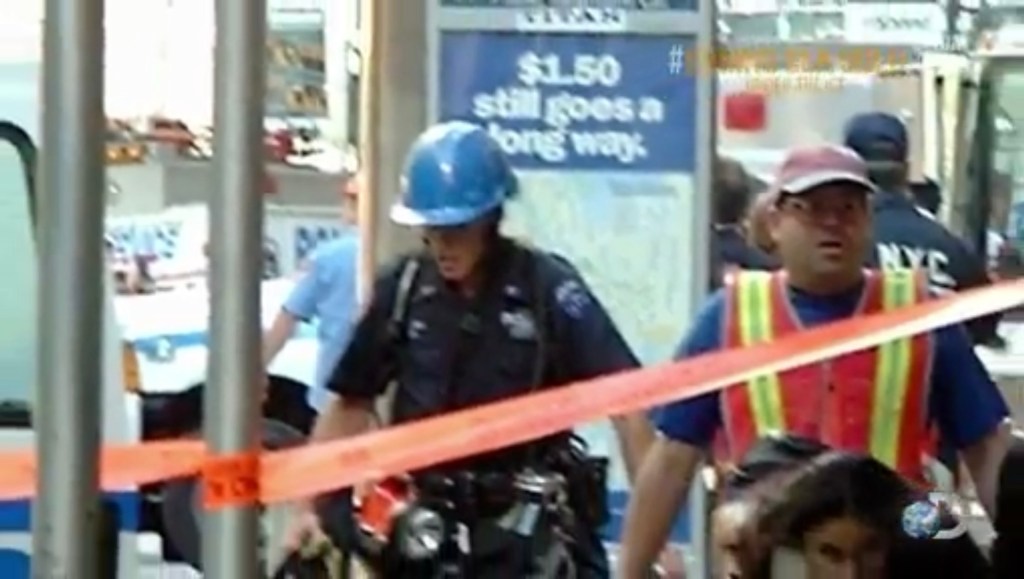
“Looking west on Vesey Street I see a lone NYPD sergeant trying to direct victims down from the elevated plaza area of the World Trade Center. He is alone and in a very dangerous location, debris is coming off the tower from as high as a quarter mile up. He looked scared but determined not to abandon the remaining victims.
I decide to join him and Detectives Claude Richards, Steve Berberich, and Officers Mike Oldmixon and Joe Dolan join me. This is no longer an investigation but a rescue mission. Berberich and Oldmixon started to clear debris from the broken escalator that goes from Vesey Street to the plaza area between WTC #5 and 6. It is littered with sheet metal that has peeled off from the remaining North Tower. Once they cleared the escalator they posted on the plaza near the escalator to direct victims to Vesey Street. Myself, Richards and Dolan respond onto the Plaza area to direct victims to Berberich and Oldmixon and on to safety.
Richards and I were physically fresh, having just arrived. . . . We raced to the ambulances and retrieved a backboard. When we got back to the plaza area the ESU members that had requested the backboard were gone. Richards and myself posted under the overhang of WTC #6, which held the US Customs offices. This building was directly north of the North Tower and its overhang afforded us some protection from falling debris.
It was from this location that we would dash out and pull people to safety and direct them to Berberich and Oldmixon and the escalators.”
September 11, 2001
(Credit: Discovery Channel)
Moments prior as Detective McNally described, he and Detective Richards had met up with Sergeant Curtin on the plaza, asking the team what they needed, Sergeant Curtin requested the detectives head down to West and Vesey Street where numerous ambulances had been staged and retrieve for the team a backboard.
Despite the overwhelming chaos of the moment, D’Allara remained as calm as can be, even warmly greeting Detective McNally, of whom he had served as a police officer with in The Bronx during the earlier days of their career. “In that indescribable backdrop of devastation and danger there was still the handshake and warm ‘hi Danny’”, McNally wrote in a November 2001 letter to the D’Allara family.
After returning to the plaza with the backboard he had requested, Sergeant Curtin decided that before evacuating themselves to safety, the group would check 6 World Trade Center, a 47-story building directly adjacent to the North Tower. Curtin’s team in addition to Detectives McNally and Richards, would sweep the lobby, searching for any injured individuals or stragglers. Once the sweep was complete, they would then finally themselves descend down to safety. It was a race against time, but even with the danger and certainty that the North Tower was in imminent danger of collapse, they were going to do everything possible to ensure not a single person was left behind.

It was in the process of that rescue mission that at 10:28AM, the North Tower would give way. Caught in the pathway, the group of police officers held onto each other as tight as they could, making themselves as small as they could. With the mountain of debris crashing down from above, the men braced for imminent impact. Soon, everything went pitch black.
“The walls shook and the ceilings came down,” Officer DeMarco told the New York Post in a September 18, 2001, interview, “I couldn’t breathe. I lay on the ground, and debris was piling up on my back.” When the dust and soot lifted and the air lightened, the men gathered themselves and sounded off for an impromptu roll call to ensure everyone was ok. Sergeant Curtin, Detective Richards, and Officer D’Allara never responded.
In that horrifying instant, the three men were killed. They died in the line of duty that fateful morning, warriors in what was the first battle in a now decades long war on terror. Over the course of a near two-decade career, especially those 14 years in Emergency Service, John had countless times charged into the most dangerous situations one can imagine. This was by far the most dangerous of them all. Even still, he, even if he knew he may not live through the greatest emergency he’d ever respond to, an emergency that would sadly prove to be his last, he charged in anyway and it’s because of that, that many people did live through that day.
Because of John, because of his fellow police officers and firefighters, including 13 of his fellow ESU brothers who died with him, among them Sergeant Curtin, Detective Vigiano, and his former student Sergeant Rodney Gillis, all of whom he originally responded to the disaster with that day, there are countless who got to see their sons and daughters grow up, grow old with their spouses, hug their parents, or go onto start families that on that day they had not yet, even if in the end that meant John didn’t get to see his two boys grow up, hug his parents again, or grow old with his wife.
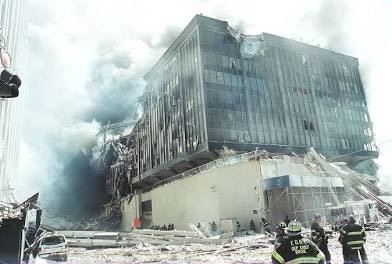
As the months followed and it became apparent that there would not be any survivors, the quest to bring him and the rest of his fallen brothers home trudged on. Gradually, through the tracing of the last radio transmissions of Sergeant Curtin, the surviving members of the unit were able to narrow their search area to where they best believed John, Sergeant Curtin, and Detective Richards had been. By March, the tracing of those transmissions at last began to give way to discovery.
Sergeant Curtin was discovered first on the night of March 6, 2002. Detective Richards was found just over three weeks later on March 29, 2002. With those discoveries, it was not going to be long before they would finally find John. Of the 14 members of the Emergency Service Unit who perished when the towers fell, all by the spring had either been recovered or if not them, the equipment they had brought with them to the scene. All to that point except for John. On that April Thursday in 2002, that search finally ended too.
As members dug, a boot with a dog tag was unearthed, the name on that tag was that of John’s. At long last, he was found. Gradually as more debris was removed, more cops converged, a crowd that swelled to over 100 by the time his body as well as his gun and gun belt were formally recovered. John was the last ESU officer, and the last NYPD officer of the 23 who had been killed to be found. After seven long months, and exactly to the day no-less, one of New York City’s most heroic sons was home.
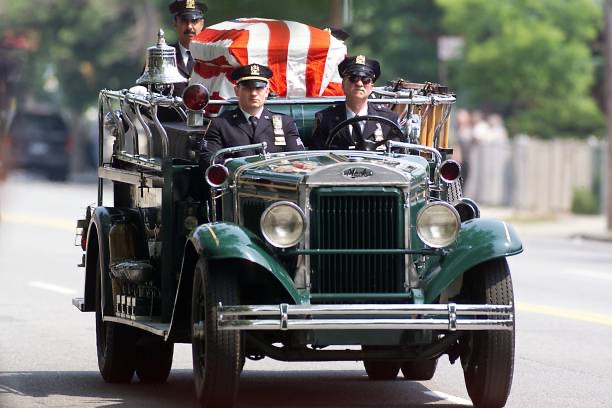
A funeral would follow on June 11, 2002, nine months to the day of the attack and his ultimate sacrifice. A final goodbye to a man who was well known and well loved for all the wonderful things he did within both his community and police unit long before he courageously rushed into the burning towers of the Trade Center on 9/11.
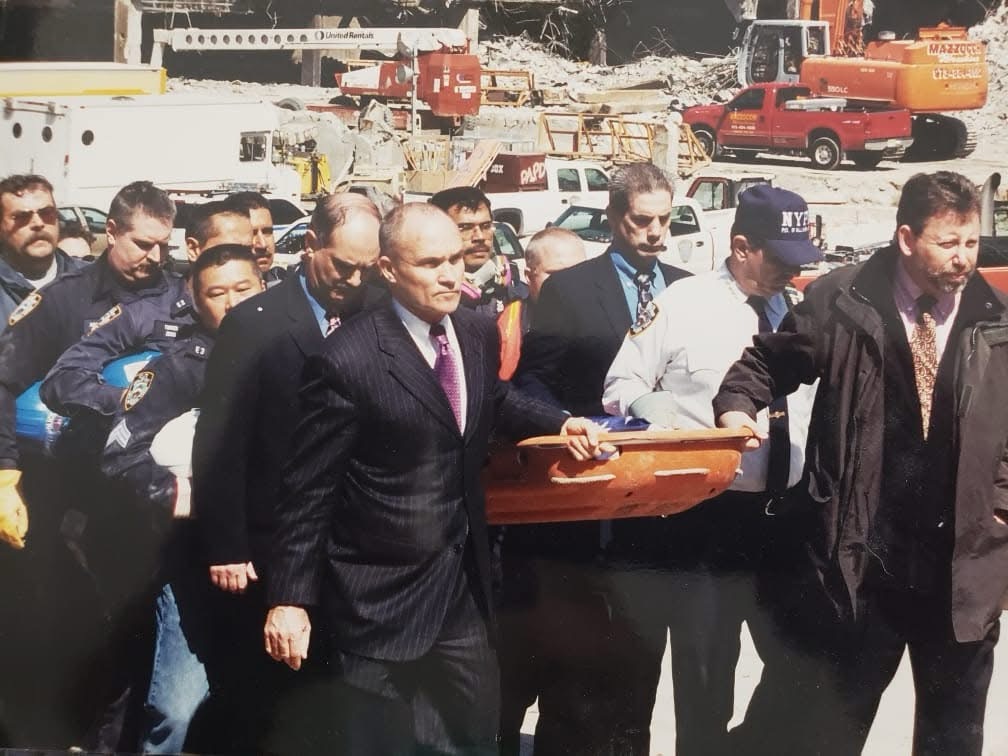
Leading the procession is then-NYPD Commissioner Ray Kelly (L) and John’s brother Dan (R)
The measure of a man who has died is how he is spoken of after he’s gone. If the conversations I’ve been able to have with those who knew and worked with John are any indication, his impact is truly immeasurable.
The funny stories of all the things he’d say and do, all the jobs in which despite the most stressful of circumstances he’d seemingly know exactly what to do and when to do it, and the lessons he was never shy to impart on younger cops who wanted to learn provide a glimpse into a man who at his core, was pure. And in the line of work he did that often involved seeing people at their worst, purity is a virtue.
The common word besides hero that is most often associated with John is gentleman. Synonymous with those words are courage and kindness. He had both. And that, is just part of what him the great man and police officer he was.


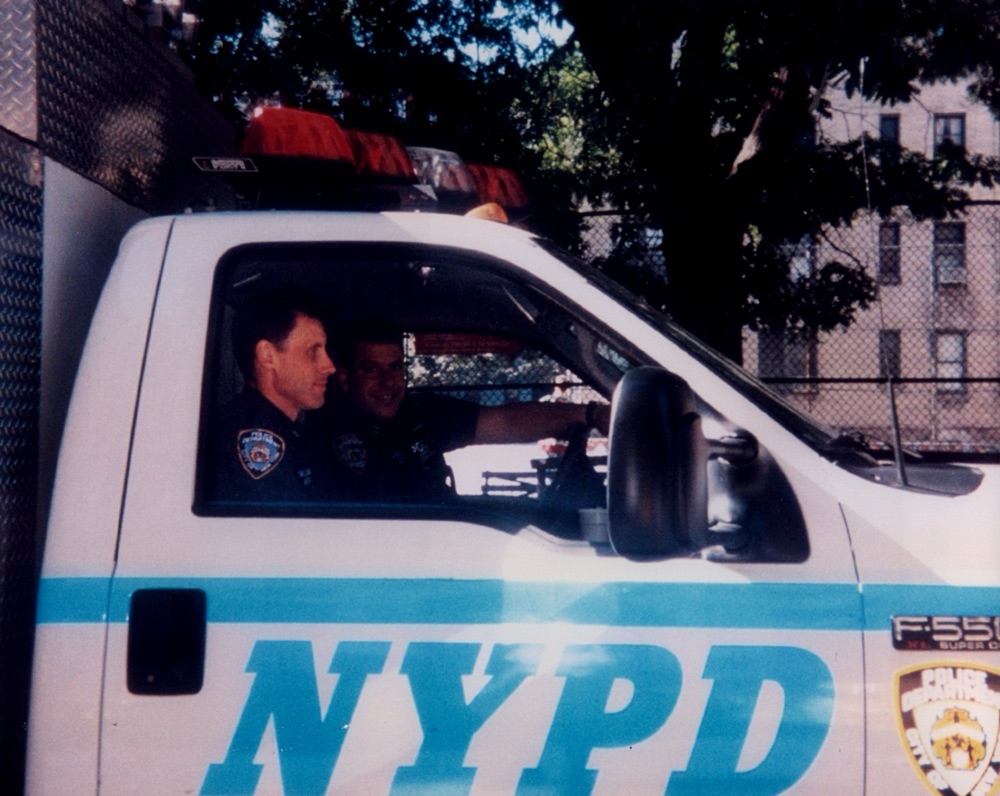
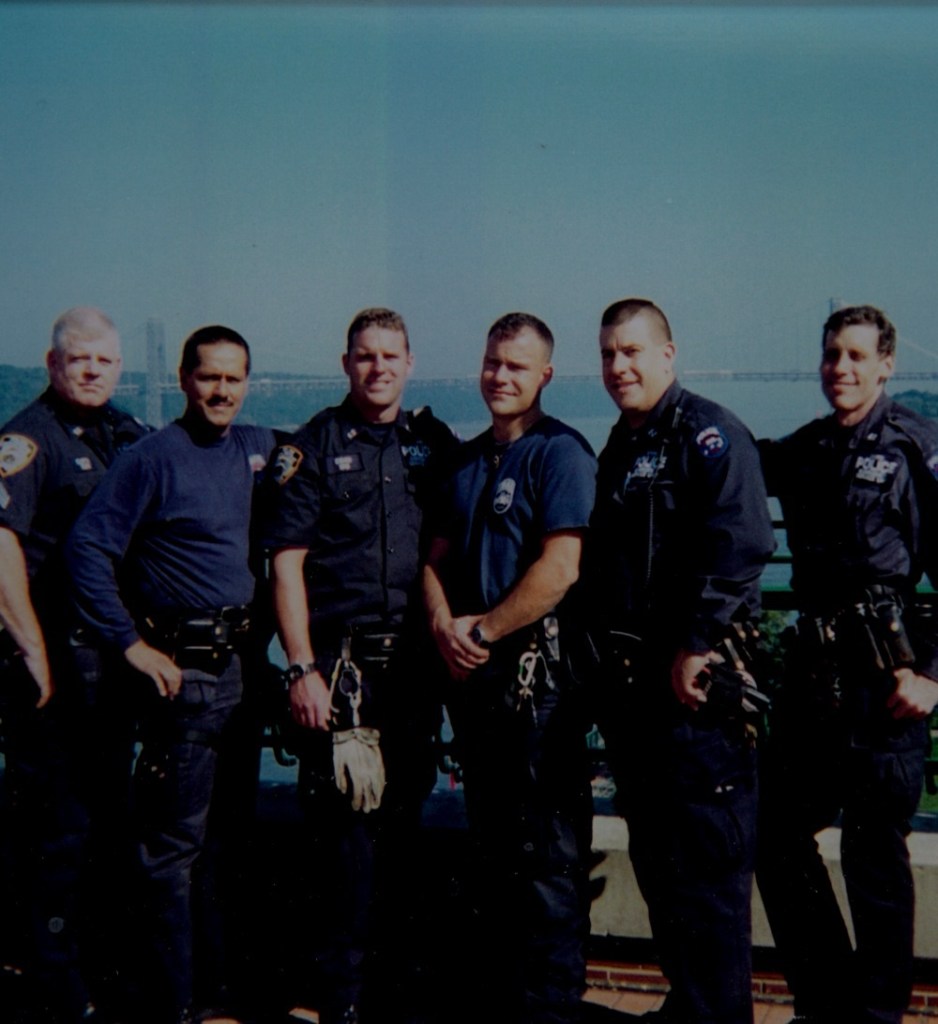
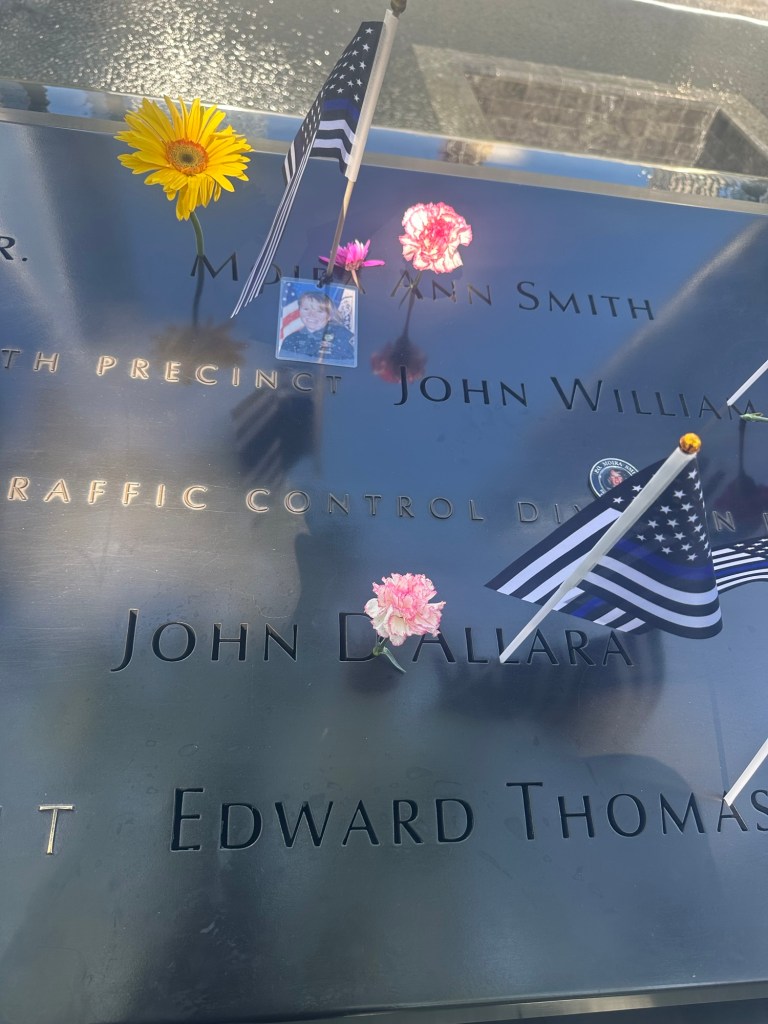
It’s been nearly a quarter century since John laid down his life on that dark day, but his selflessness and commitment to service remain beacons of strength to everyone of whom his life has in some way touched.
Those who worked with him and called him a friend, and those who in the years since have joined the Emergency Service Unit of which he loved so very much and have the tall tasks of living up to the high standard he spent 14 years setting.
It was General George S. Patton who once said “It is not how these men died that made them heroes, it is how they lived.” John D’Allara lived and lived well in his 47 years, a legacy embedded in those he loved, those he served, and on that tragic September morning in 2001, those he saved.
Mike Colón is the host of the Mic’d In New Haven Podcast which can be found on all podcast platforms and is simulcast in video form on YouTube
 Mike Colón Media
Leave a comment